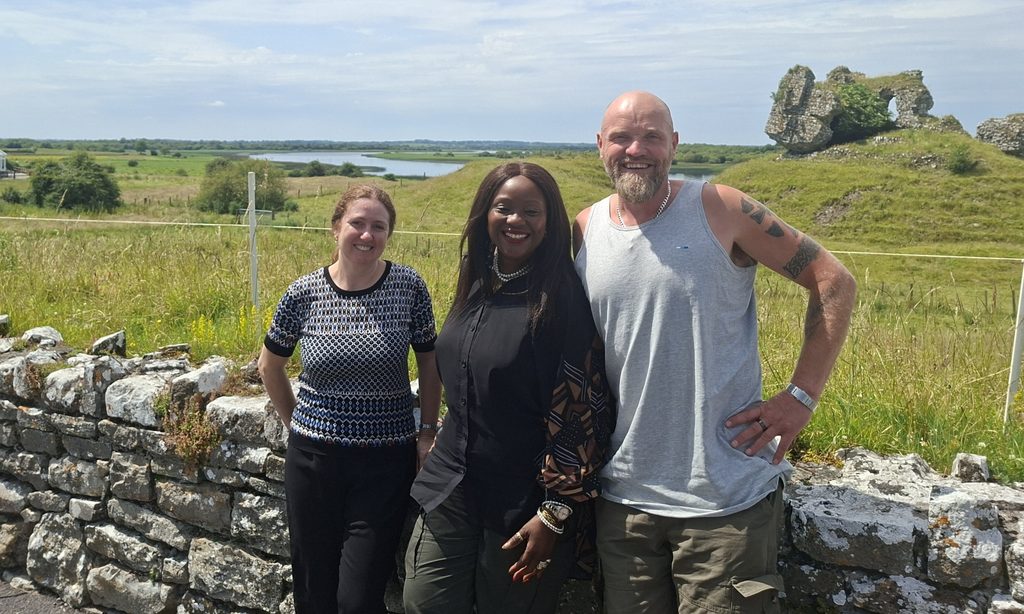
The summer is over, we are ‘back to school’ and we have great summer memories – one of the most memorable being when we (the IRWC) together with the Tóchar Midlands Wetland Restoration Project, welcomed Dr. Musonda Mumba, Secretary General of the International Convention on Wetlands and Dr. Flore Lafaye de Micheaux, Senior Advisor for Europe for the International Convention on Wetlands, to Ireland in June! Owen Murphy, Project Manager with the Breeding Waders EIP and IRWC member, showed us the River Shannon Callows near Clonmacnoise, Co. Offaly. Dr. Mumba and Dr. Lafaye de Micheaux were amazed at the relatively natural floodplains, the space available for the river to flood and the fact that the river channel was not channelised and had no major industrial centre along this 20km section of river. They commented that this relatively natural transition from above flood zone down through flood meadows/callows to the river is very rare in Western Europe now and that most of the large rivers have been modified by industry, channelisation and developments on the floodplain. Of course, we have some of those pressures here in Ireland too, but the 20km stretch of the River Shannon between Athlone and Ballinasloe impressed our visitors – and they are international wetland experts. This section of the River Shannon forms part of the River Shannon Callows SAC and the Middle Shannon Callows SPA, protected for various wetland habitats, mammals and birds including Alluvial Woodland, Molinia Meadows, Otter, and waders and waterbirds such as Lapwing, Whooper Swan and Wigeon. The breeding waders within the callows unfortunately are under threat and face many pressures, including land use pressures and predation. The work of the Breeding Waders EIP aims to tackle the many causes behind the significant declines in breeding wader populations. Owen Murphy, the Project Manager of the Breeding Waders EIP gave a fascinating talk at our recent Voices and Vision for Ireland’s Wetlands Conference where he shared some information on the EIP including their innovative approaches such as headstarting wader chicks and training for Nest Protection Officers. You can see Owen’s presentation on our resources page here and find out more about the EIP here.